Why Market Size Matters in Venture Capital Decisions

Why Market Size Matters in Venture Capital Decisions

Imagine two startups with equally talented founders and equally impressive products. The first sells software to a niche industry worth roughly $100 million worldwide. The second solves a similar problem in a market that could eventually be worth tens of billions of dollars. Even if both companies perform well, venture capital investors may view them … Read more


How to Build a Fundraising Plan for Your New Startup

How to Build a Fundraising Plan for Your New Startup

Raising money for a startup can feel exciting at first. You imagine meeting investors, delivering a brilliant pitch, and eventually seeing a large investment appear in your company’s bank account. In reality, successful fundraising usually involves much more planning. Before contacting investors, founders need to understand how much money they actually need, what that money … Read more

Key Milestones Investors Expect Before a Funding Round

Key Milestones Investors Expect Before a Funding Round

Raising money for a startup can sometimes feel like preparing for an exam without knowing exactly what questions will be asked. You may have an exciting product, a convincing pitch deck, and ambitious plans for the next few years. But investors usually want something more concrete. They want evidence that the company has moved beyond … Read more

Why Venture Capital Differs from Traditional Bank Loans

Why Venture Capital Differs from Traditional Bank Loans

Imagine two entrepreneurs who each need $500,000 to grow their businesses. One walks into a bank and asks for a loan. The other meets with venture capital investors and offers them a stake in the company. Both entrepreneurs are looking for money, but what happens next can be completely different. A bank typically wants to … Read more

How Venture Capital Helps Startups Grow More Quickly

How Venture Capital Helps Startups Grow More Quickly

Starting a company is one thing. Growing it fast enough to compete in a crowded market is something completely different. A startup might have a great product, talented founders, and enthusiastic early customers, yet still struggle to expand. Hiring employees costs money. Marketing requires a budget. Product development takes time, and entering a new market … Read more

Key Legal Documents Used in Venture Capital Transactions

Key Legal Documents Used in Venture Capital Transactions

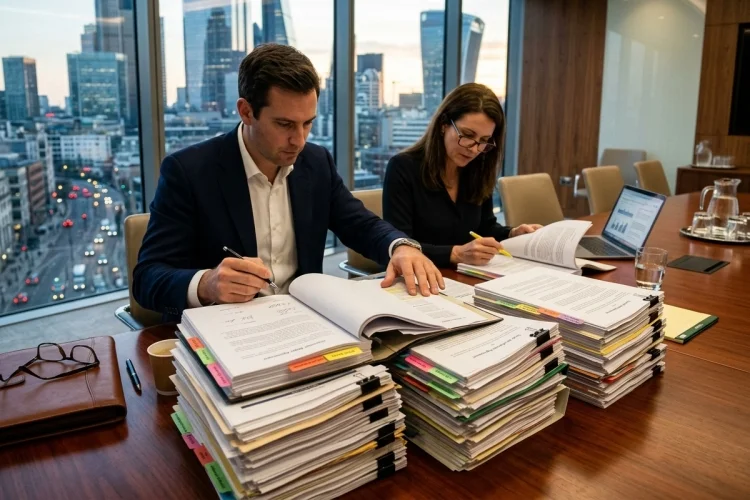
A venture capital deal may begin with a pitch deck and a few investor meetings, but it eventually turns into something much less glamorous: paperwork. Quite a lot of paperwork. For founders raising a priced VC round, the legal package can include a term sheet, stock purchase agreement, amended corporate charter, investors’ rights agreement, voting … Read more

How Equity Ownership Changes During Startup Funding Rounds

How Equity Ownership Changes During Startup Funding Rounds

When founders start a company, the ownership structure often looks wonderfully simple. Two founders might own 50% each, or a solo founder may initially control almost the entire business. Then fundraising begins. New investors receive shares, employees get stock options, SAFEs convert into equity, and additional financing rounds introduce new shareholders. Before long, a founder … Read more

How to Read a Venture Capital Term Sheet with Confidence

How to Read a Venture Capital Term Sheet with Confidence

Receiving a venture capital term sheet can feel like a huge moment. After weeks-or months-of pitching investors, someone is finally saying, “We want to invest.” Then you open the document and see phrases like pre-money valuation, liquidation preference, protective provisions, anti-dilution, option pool, and pro rata rights. Suddenly, the exciting part feels a little more … Read more

How Venture Capital Valuation Works for Early Startups

How Venture Capital Valuation Works for Early Startups

How can a startup with little revenue-and sometimes no profit at all-be worth $5 million, $10 million, or even more? That question sits at the heart of venture capital valuation. Valuing an established business can involve years of revenue, profit, assets, and cash-flow data. Early startups usually offer much less historical information. Investors may instead … Read more

How to Manage the Final Stages of a Startup Funding Round

How to Manage the Final Stages of a Startup Funding Round

Getting investors interested in your startup is exciting, but a funding round is not finished just because someone says, “We want to invest.” The final stages can involve some of the most important work in the entire fundraising process. Founders may need to complete due diligence, negotiate final legal terms, update the cap table, collect … Read more